

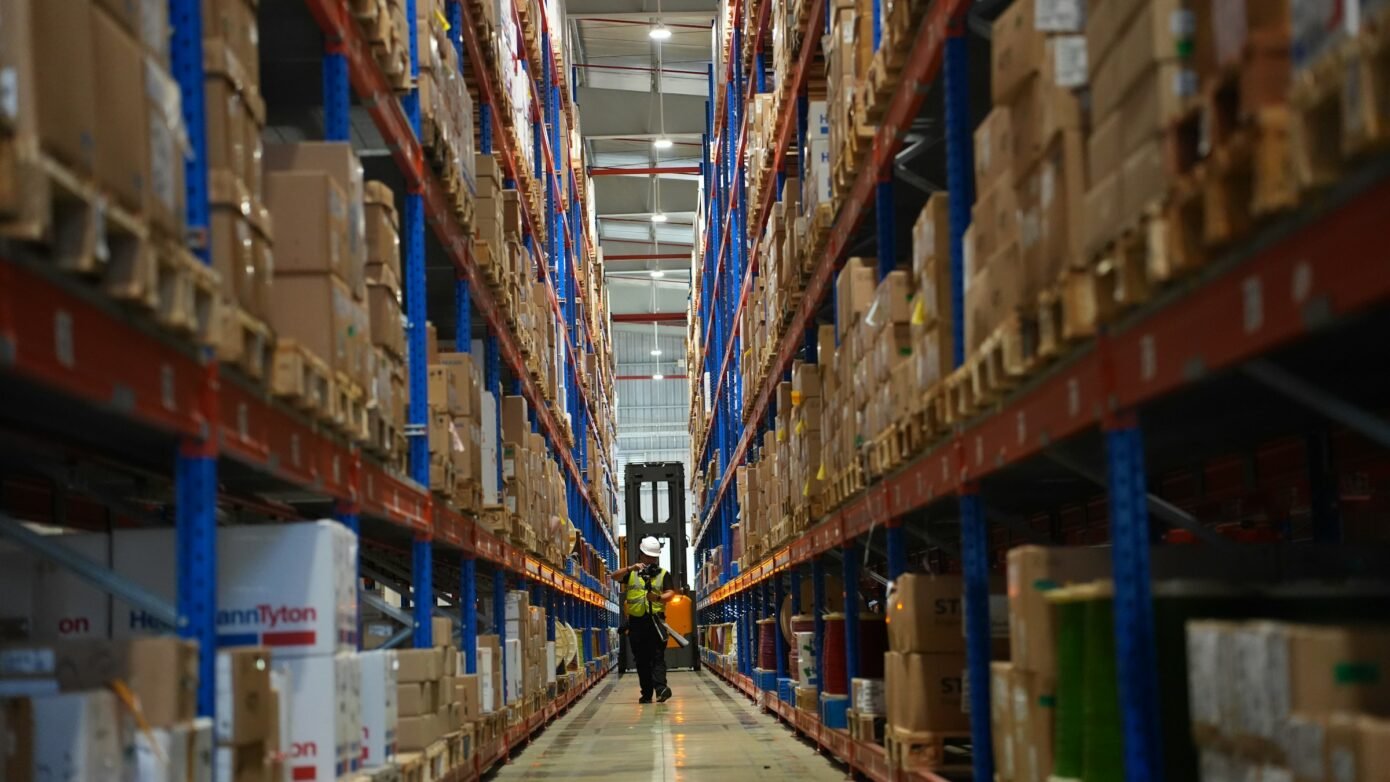
Why awareness is not the problem
A new financial year creates the impression of a reset. Plans are refreshed, targets are agreed, and there is an expectation that performance will improve. Yet for many organisations, the same inventory issues remain in place. The same excess, slow moving, and forgotten inventory is still sitting in the warehouse, still tying up capital, and still influencing decisions. The only real difference is the reporting period.
What makes this difficult to justify is that these problems are not hidden. Most businesses already know exactly where inventory is not performing. They can identify which part numbers or SKUs are not aligned with demand, which items have been sitting in stock too long, and which decisions led to the current position. The issue is not a lack of visibility. It is that nothing meaningful has been done to change the outcome.
The pattern of carrying problems forward
There is a consistent pattern that can be observed across many businesses, where inventory issues are recognised but not fully addressed. Instead of resolving the underlying problem, organisations tend to manage the situation over time. Parameters are adjusted, short term actions are introduced, and efforts are made to create movement in the stock. While these actions may deliver temporary improvements, they do not change the overall outcome.
The result is that the same issues continue to reappear. Inventory that should have been addressed earlier becomes embedded within the operation, gradually ageing and becoming more difficult to recover. Over time, this behaviour becomes accepted as part of normal operations. What should be treated as an exception requiring intervention is instead absorbed into the day to day running of the business.
Why decisions are avoided
Addressing recurring inventory problems requires decisions that challenge how the business currently operates. It often involves questioning assumptions that have been accepted without scrutiny, revisiting purchasing behaviours, and aligning multiple functions around a common objective. These decisions can have wider implications, affecting supplier relationships, internal processes, and performance metrics that teams are measured against.
Because of this, there is often a reluctance to act. Maintaining the current state feels less disruptive than introducing change. The business continues to function, customers are still served, and performance appears stable enough to avoid immediate concern. This creates a situation where the issue is tolerated rather than resolved. The focus shifts to managing the impact rather than addressing the cause.
The cost of doing nothing
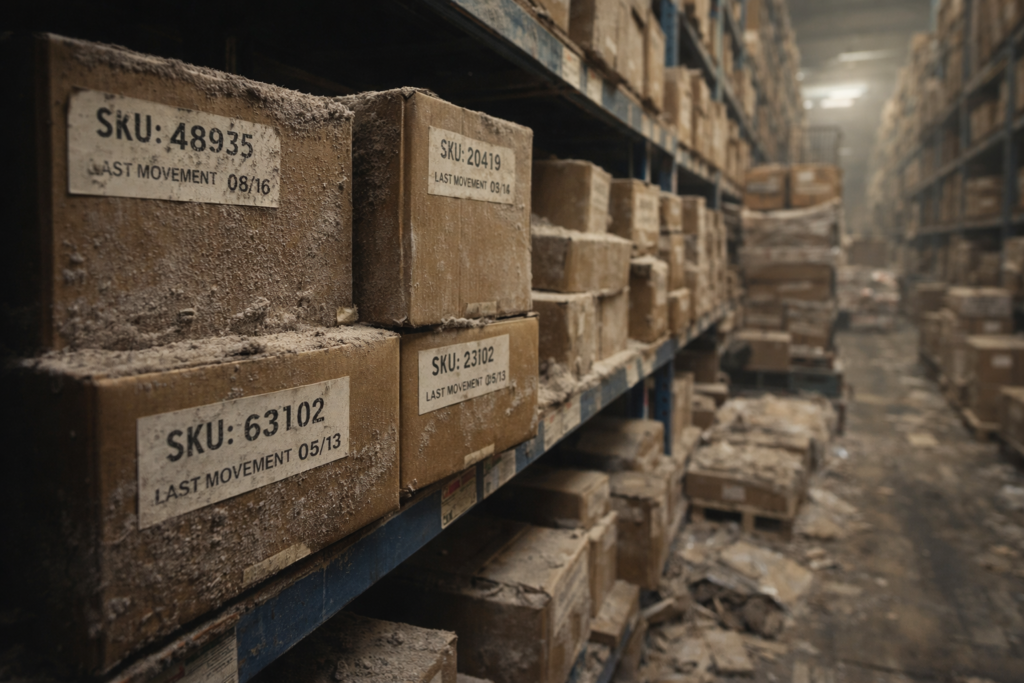
The cost of carrying inventory that is not performing is not always immediately visible, but it is significant. Stock that is not moving still occupies space, requires handling, and consumes working capital. It reduces the organisation’s ability to respond to changes in demand and limits flexibility in decision making. Over time, this creates inefficiencies that extend beyond the warehouse and begin to affect the wider operation.
Financially, the impact becomes more pronounced as inventory ages. The longer stock remains in the system, the more difficult it becomes to recover value from it. Opportunities to reposition, repurpose, or sell the stock diminish, leaving fewer options available. What could have been addressed early with a controlled approach often results in reactive decisions, reduced margins, or write offs. More importantly, the same conditions that created the issue remain unchanged, increasing the likelihood that it will happen again.
Repetition is a signal, not a coincidence
When the same inventory issues continue to appear, it is not the result of isolated events. It is an indication that the process is consistently producing the same outcome. Treating each occurrence as a separate issue misses the underlying point. The focus should be on understanding why the pattern exists and what is driving it.
Recurring issues highlight where decisions are not aligned with actual demand, where processes are not functioning as intended, and where assumptions are not being challenged. These patterns provide valuable insight into how the system is operating. Ignoring them allows the behaviour to continue unchecked, reinforcing the cycle rather than breaking it.
Changing the outcome requires changing the decision
Improving inventory performance is not achieved through isolated actions or short-term fixes. It requires a change in how decisions are made and applied across the organisation. This involves creating clarity around decision making processes, ensuring alignment between functions, and establishing accountability for outcomes.
Forecasts should be reviewed critically rather than accepted without question. Purchasing decisions should reflect actual demand rather than historical patterns or convenience. Product changes should trigger clear and coordinated actions across planning, procurement, and inventory management. These principles are straightforward, but they require consistency and discipline to deliver results. Without this, the same decisions will continue to produce the same outcomes.
What this means for your business
Most organisations already have the capability to improve their inventory performance. They have access to data, systems, and experienced teams. The challenge lies in how decisions are made and whether they are followed through with consistency. Addressing recurring issues requires a shift in focus from managing outcomes to controlling the factors that create them.
Starting the new financial year in a stronger position is not about introducing new targets or initiatives. It is about making deliberate changes to how the business operates and ensuring those changes are sustained. This requires ownership, alignment, and a willingness to challenge existing practices.
Final thought
The reality is that most businesses already know where their inventory problems are. The question is whether they are prepared to act on that knowledge. Continuing to manage the issue will lead to the same outcome, with the same stock remaining in place and the same challenges persisting over time.
Acting requires effort and commitment, but it creates a different result. Inventory becomes more controlled, decision making becomes clearer, and performance improves in a way that is both visible and measurable. The difference is not in the level of awareness. It is in the willingness to make and follow through on the decisions that are required.
The issue is not a lack of visibility. It is that the decision to act has not been taken.