


Inventory problems rarely start with a major failure. In most businesses the warning signs build slowly over time through small process gaps, inconsistent planning, changing demand, supplier issues, and decisions made without accurate or aligned data.
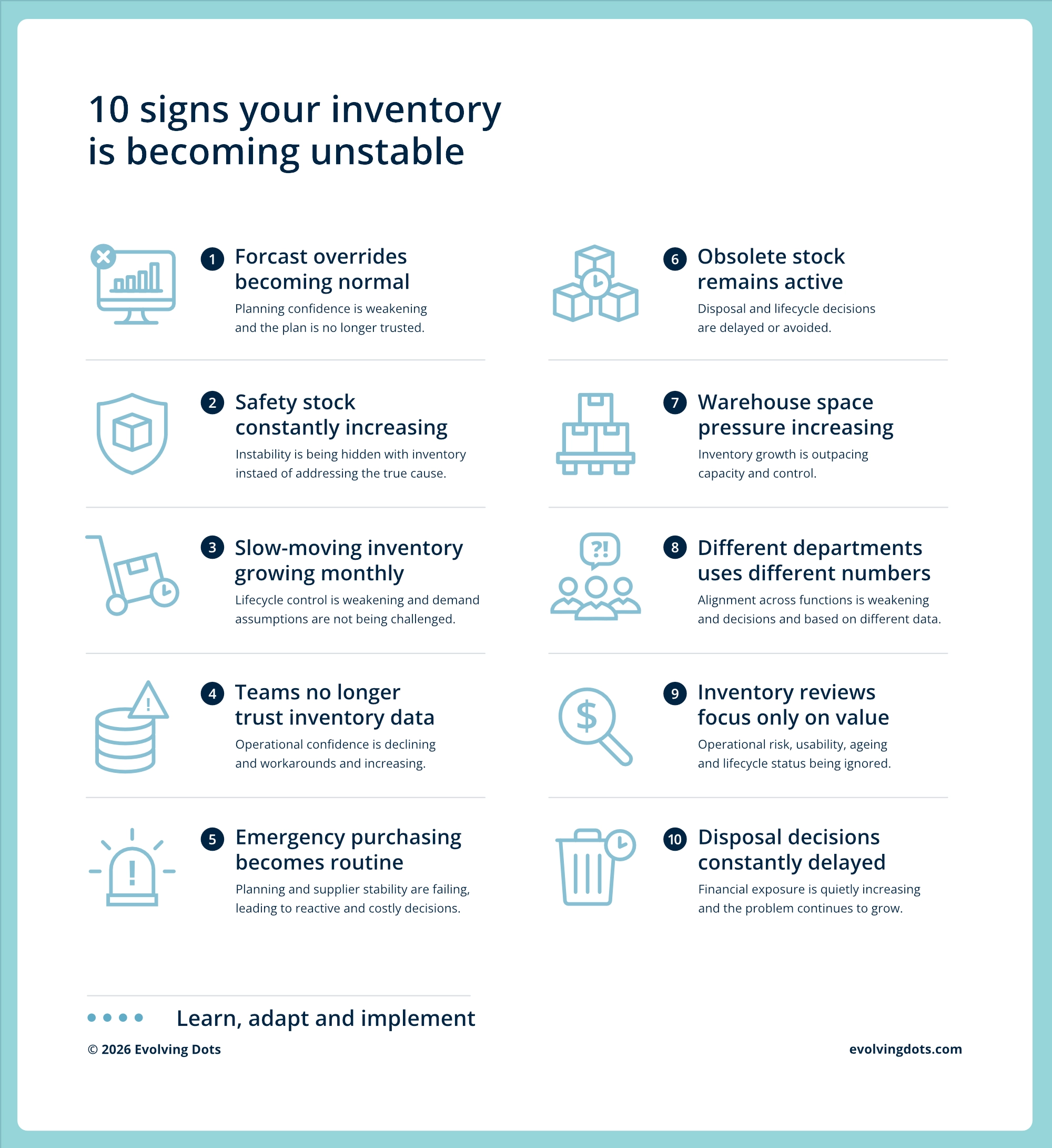
At first the impact may seem manageable. Safety stock increases, emergency purchasing becomes more common, warehouse pressure grows, and teams begin working around the system instead of trusting it. Over time these behaviours create instability across planning, inventory control, operations, and financial performance.
Strong inventory management depends on clear processes, reliable information, and consistent operational discipline across the business. When those controls weaken, inventory quickly becomes reactive instead of controlled.
Recognising these warning signs early gives businesses the opportunity to correct problems before they develop into excess stock, shortages, rising costs, and operational disruption.
Final though
Inventory instability is rarely created inside the warehouse. It is usually the result of disconnected planning, weak supplier control, delayed lifecycle decisions, inaccurate information, and departments operating without alignment across the business. Organisations that recognise these warning signs early maintain greater operational control, reduce financial exposure, and prevent small issues from becoming larger business problems.
Strong inventory control starts with aligned decision making across the business.
Leave a Reply