

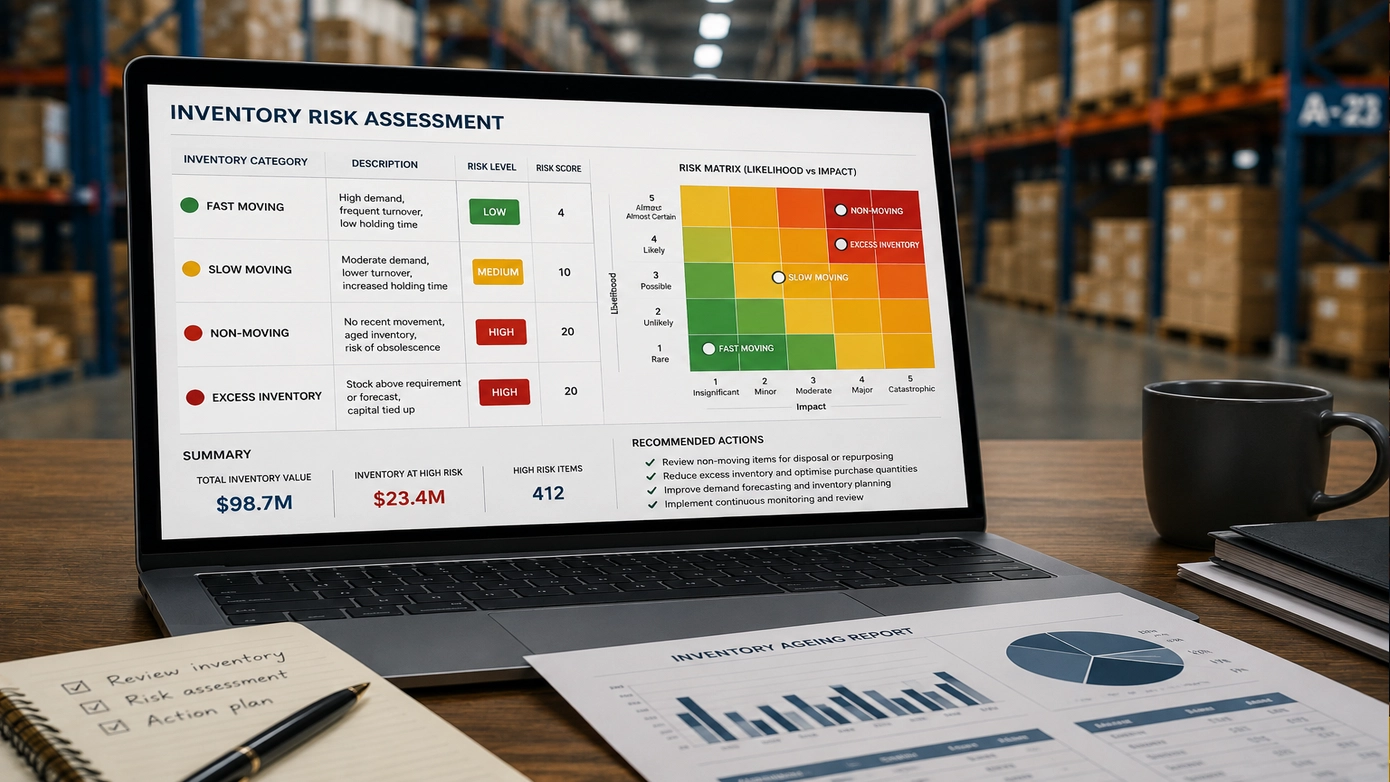
Too often, risk assessments are carried out only after a problem has occurred. By that stage, the organisation is already reacting to disruption rather than preventing it. Effective risk management requires a more structured approach. It requires organisations to define what is being assessed, identify the areas that are most critical, understand the causes of potential failures, evaluate existing controls, and implement actions that reduce exposure.
This approach aligns closely with the principles of ISO 31000, the internationally recognised standard for risk management. ISO 31000 provides organisations with a structured framework for identifying, assessing, evaluating, and treating risk while supporting informed decision making across all levels of the business. The standard emphasises the importance of integrating risk management into organisational activities, ensuring that decisions are based upon reliable information, clear accountability, continual review, and an understanding of both threats and opportunities.
These principles apply throughout the supply chain, where organisations must manage uncertainty across suppliers, inventory, logistics networks, assets, information flows, and product lifecycles. Effective risk management is not about eliminating every possible risk. It is about understanding which risks are most significant, assessing their potential impact, and implementing appropriate controls to reduce the likelihood and consequences of disruption.
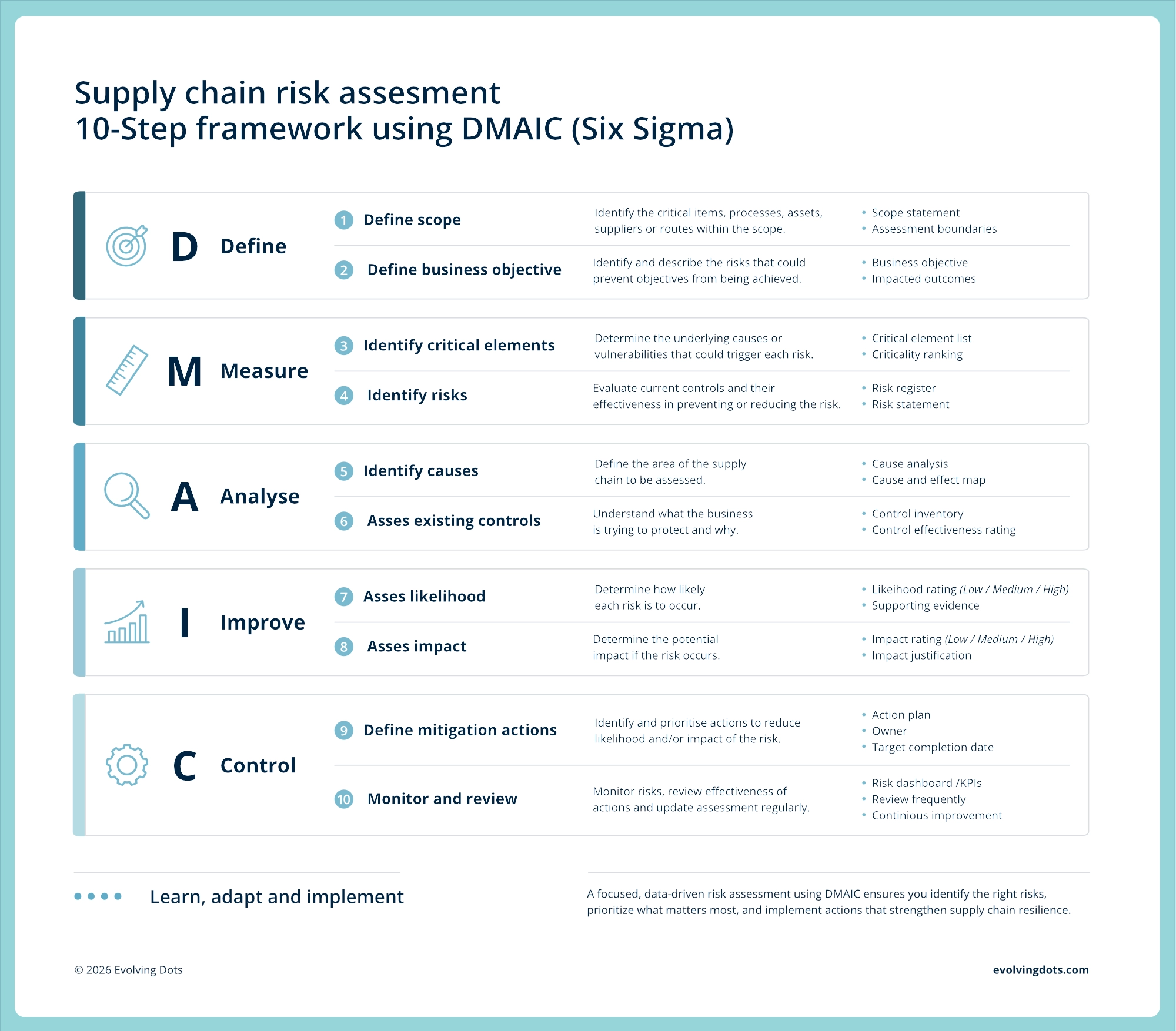
The DMAIC methodology provides a practical framework for carrying out this assessment. By defining the scope, measuring critical elements, analysing risks and root causes, improving controls, and establishing ongoing monitoring, organisations can move beyond subjective judgement and create a consistent process for evaluating risk. The result is greater visibility, stronger decision making, improved operational resilience, and better alignment between business objectives and day to day supply chain activities.
The following ten step framework combines DMAIC principles with recognised risk management practices aligned to ISO 31000. It provides a practical and structured approach to identifying, assessing, prioritising, and controlling supply chain risks before they become operational or financial problems.
Final though
Most organisations do not lack awareness of risk. They lack a structured process for identifying, assessing, and controlling it before it affects performance. Supplier failure, inventory shortages, asset breakdowns, transport disruption, and poor information rarely occur without warning. The warning signs are often present long before the operational or financial impact becomes visible.
A structured risk assessment provides the visibility needed to identify vulnerabilities, understand their potential consequences, and prioritise the actions that will deliver the greatest value. By applying the DMAIC methodology, organisations can move beyond assumptions and reactive decision making, creating a repeatable process that improves consistency, accountability, and operational control.
The objective is not to eliminate every risk. The objective is to understand which risks matter most, ensure appropriate controls are in place, and continually review changing conditions across the supply chain. Organisations that take this approach are better positioned to protect service levels, support business objectives, and maintain resilience in an increasingly complex operating environment.
The strongest supply chains are not those with the fewest risks, they are the ones that identify, assess, and control risk before disruption occurs.
Leave a Reply